Paz Arés Osset, the Artist

Paz Arés, the Artist

Paz Arés, la Artista

Paz Arés, l'Artista

艺术家帕斯·阿雷斯

الفنانة باز أريس

Return to Valencia

Return to Valencia

In 1968, the family of Paz Arés Osset was forced to return to Spain after the loss of Sidi Ifni, a Spanish enclave on the Atlantic coast of Morocco. This return marked the beginning of a new stage in Paz's life, a stage that would be both challenging and transformative.

Sidi Ifni had been a significant part of the Spanish Protectorate in Morocco, but political and military pressures led to its return to Morocco in 1969. For the Arés family, this change meant leaving behind a life built amid conflicts and tensions. The transition to Valencia was a relief from the uncertainty of living in a conflict zone, but it also presented its own challenges.

A year before the family's official return, Paz was sent to Valencia by her parents, who knew in advance that Sidi Ifni would be handed over to Morocco, but did not want to worry her. Thus, Paz moved calmly, unaware of the real reason behind her relocation.

During the Christmas of 1968, Paz returned to Sidi Ifni and was able to appreciate the place and her friends more. The collective celebrations and the union among all the Spaniards living there were palpable. Even a musical group enlivened one of the events, and one of its members visited Paz in Valencia, showing her a city that was still new to her.

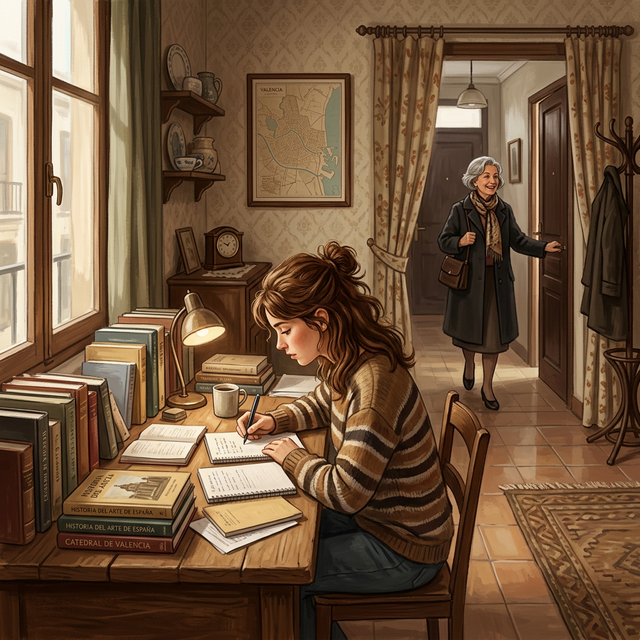
In Valencia, Paz lived alone with her maternal grandmother, Amelia, who moved to the family home so that she would not be alone. Although Paz devoted much time to studying, she attended a church where dances were organized, introduced by her friend Marina. Sometimes, once a week, Paz allowed herself a break and joined the group for dancing.

In 1969, Paz began painting in oil. Additionally, she stayed for lunch at the Colegio de las Escolapias, where she was not a boarder but did have lunch. Paz often ate what the other girls left on their plates.

With her grandmother Amelia, Paz maintained some conversations, though few, due to her intense dedication to studying. During dinner, they sometimes exchanged words. Her grandmother was an admirable woman who walked an hour every day to the Valencia Cathedral, arguing that it was good for health. Inspired by her grandmother, Paz began walking to the Colegio de las Escolapias, a 30-minute journey each day, which seemed much compared to Sidi Ifni, where everything was 10 minutes away.

Valencia, with its vibrant urban life and rich Mediterranean culture, was a completely different world from what Paz had known in Sidi Ifni. The city offered new opportunities but also required significant adaptation from the family. For Paz, then a teenager, this change was especially impactful. She was at a crucial stage of her personal and academic development, and the move represented both a break and a new beginning.

Adaptation to Valencia was not easy. Paz had to integrate into a new school environment, the Colegio de las Escolapias, where she faced an educational level much higher than what she had received in Sidi Ifni. This academic disparity was a hard blow for her, accustomed to a less demanding educational system with fewer resources. The difference in the level of instruction made her feel out of place and experience great pressure to catch up.

Paz's perfectionism, a characteristic that would accompany her throughout her life, probably as a result of complications at birth that imprinted a fear of imminent death on her brain, making her constantly analyze any detail that could go wrong, manifested intensely during this period. Determined to overcome her limitations and reach the level of her classmates, Paz dedicated long hours to studying. This incessant effort, although exhausting, was also a testament to her determination and tireless spirit.

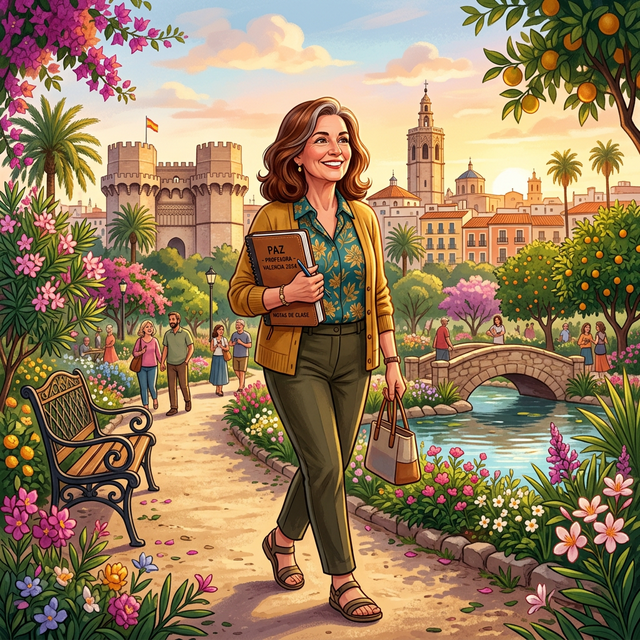
Despite the challenges, the return to Valencia also offered unique opportunities for Paz's personal and professional growth. The city, known for its rich cultural heritage and dynamic environment, provided a stimulating setting for a curious and creative young woman like her. Valencia, with its festivities, historical monuments, and active social life, became a constant source of inspiration.

Moreover, life in Valencia allowed Paz to connect with new friends and communities. These relationships not only provided her with emotional support during difficult times but also broadened her worldview and cultural horizons. The connection with the local community and participation in social and cultural events enriched her experience and contributed to her overall development.

The time spent in Valencia was crucial in preparing Paz for her future career as a teacher. The education received at the Colegio de las Escolapias, though challenging, equipped her with a solid foundation of knowledge and skills. This period of intense study and adaptation also strengthened her character, teaching her lessons of perseverance, resilience, and self-motivation.
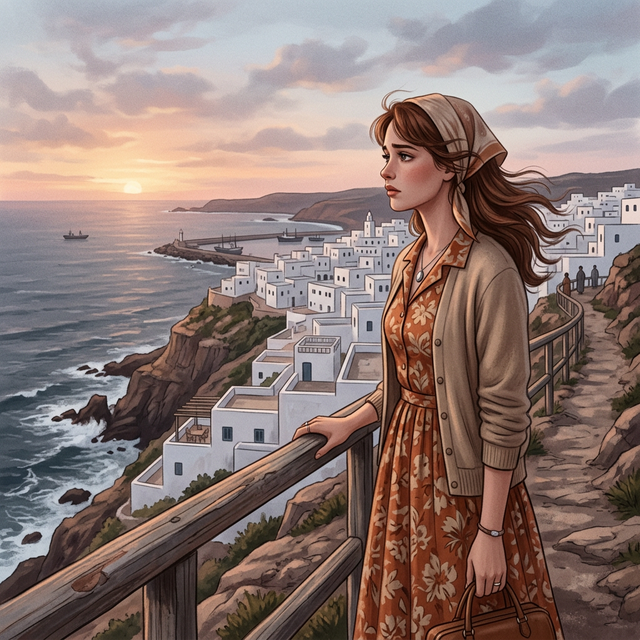

Therefore, the return to Valencia in 1968 was a turning point in the life of Paz Arés Osset. Through the challenges of adaptation and the opportunities for growth, Valencia became the stage for her adolescence and the beginnings of her teaching career. The city, with its rich culture and vibrant social life, left an indelible mark on her heart, marking the beginning of a journey that would define her life and work.